Home › Commercial Concrete Foundations and Footings
Reliable, professional commercial concrete foundations in Round Rock, TX from Superior Concrete Round Rock. Contact us today for a free on-site estimate.
Superior Concrete Round Rock provides professional commercial concrete foundations throughout Round Rock, TX, Texas and the surrounding area. Our licensed, insured crew delivers safe, clean, on-time work with a free estimate before anything begins. Call (737) 520-3156 or request your free quote.
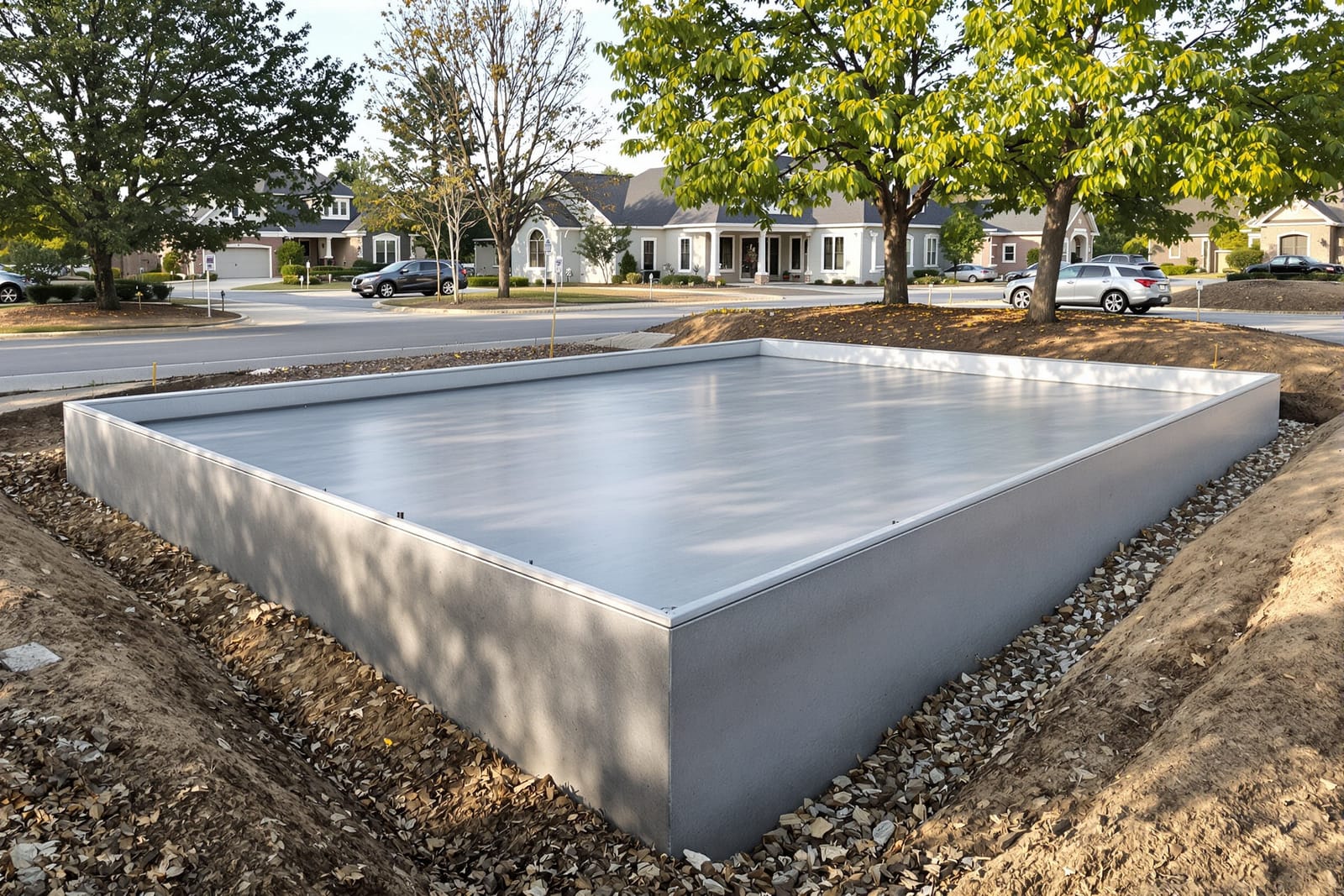
Commercial concrete foundations in Round Rock that match your project, not a template
When you call Superior Concrete Round Rock for commercial concrete foundations, we start by understanding your actual building and site conditions in Round Rock, not just square footage. A 2,500 sq ft retail shell on University Blvd has very different foundation needs than a tilt‑wall warehouse near the 130 toll road or a medical office near St. David’s Round Rock.
Our first step is a site visit and plan review. We look at your architectural and structural drawings, existing pavement or structures, and how trucks, forklifts, or customers will move on the property. In Round Rock and North Austin, we pay close attention to expansive clay soils, the presence of limestone close to the surface, and drainage paths created by nearby creeks like Brushy Creek or Lake Creek.
We coordinate directly with your engineer (or connect you with one if you do not have one yet) to confirm foundation type and reinforcing schedule. For many local commercial projects this means slab‑on‑grade with thickened edge beams and isolated spread footings for columns, but we also routinely pour grade beams, mat foundations, equipment pads, and pier caps tied into drilled piers.
Before anything is scheduled, we prepare a detailed written scope and line‑item estimate. You will see breakouts for excavation, base prep, vapor barriers, rebar, concrete mix design, anchor bolts, and finishing, which helps you compare options and phase work around other trades on your job.
How we actually build commercial foundations and footings
Once permits and engineering are in place, Superior Concrete Round Rock moves into production. We start with layout, using lasers and string lines tied to your survey control points so column footings, anchor bolts, and plumbing penetrations line up with your steel and framing packages.
Excavation comes next. In Round Rock, we often encounter a mix of plastic clay and shallow limestone. Where clay is dominant, we over‑excavate to remove unstable material and import compacted flex base or select fill. Where limestone is close to final grade, we may reduce undercutting and rely more on cleaning and leveling the rock, which can actually save you cost if handled correctly.
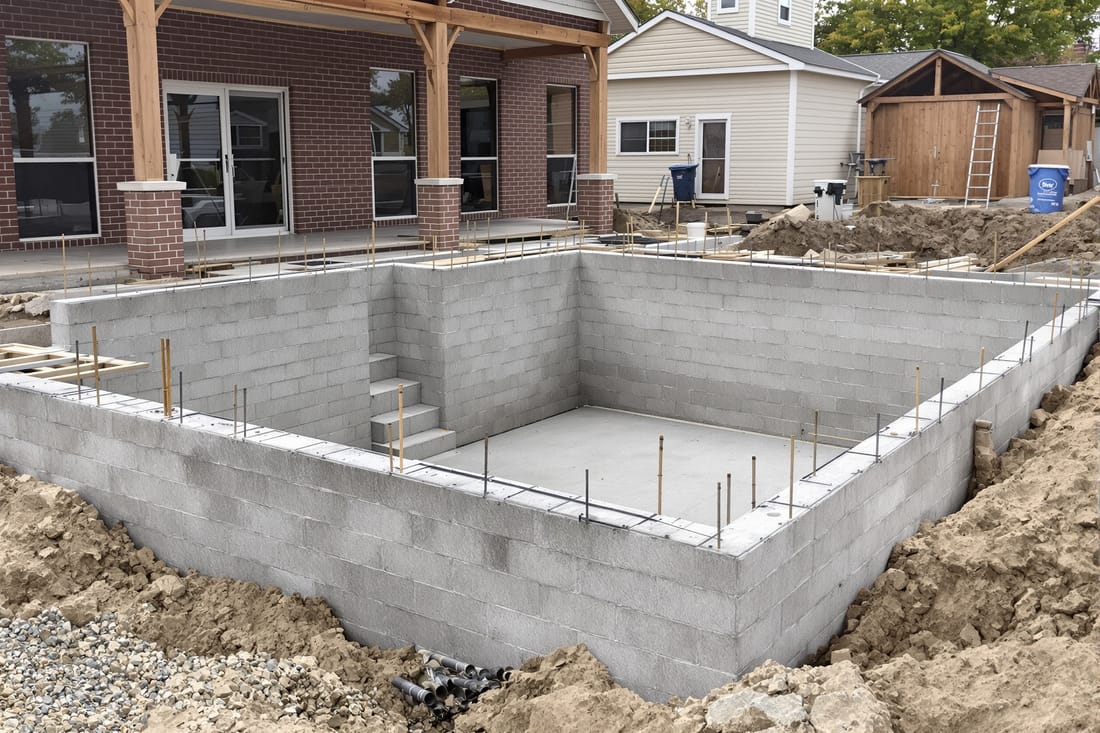
Formwork is installed for perimeter beams, interior grade beams, and isolated footings. We use properly braced wood or metal forms and nailers that hold true during large commercial pours. We then place rebar according to plan, tying cages for pads and beams and setting rebar chairs to maintain the design cover so steel does not end up on the subgrade.
For concrete, we typically use 3,000 to 4,000 psi mixes for commercial slabs and footings in this area, often with low water‑cement ratios and mid‑range water reducers to maintain workability. For restaurants, medical offices, or buildings requiring moisture‑sensitive flooring, we can incorporate vapor barriers and low‑shrinkage or moisture‑mitigating mixes. On many commercial foundations we also place dowels to tie into CMU walls or future slab pours.
During the pour, we consolidate concrete using internal vibrators around column cages and thick footings to remove air pockets and avoid honeycombing. We then screed, bull float, and machine‑trowel finish the slab where required, and we saw control joints on a tight schedule to reduce random cracking.
Design options, cost drivers, and how to plan your budget
Many commercial clients in Round Rock ask why two similar sized buildings can have very different foundation costs. The answer is in the soil, the loads, and the details in the engineering. Superior Concrete Round Rock walks you through these variables before you commit to a final design.
Soil conditions are a major factor. Expansive clay that swells and shrinks with our Central Texas weather may require deeper perimeter beams, more steel, or drilled piers tied to stable strata. A site with competent limestone near grade might allow a thinner slab with shallower beams and less imported fill. We recommend a geotechnical report for most commercial foundations, and we actually read it and apply it to your estimate.
Loading is the next cost driver. A light retail strip with wood framing and a simple roof system might sit on a conventional slab‑on‑grade. A crane bay, warehouse with heavy pallet racking, or a restaurant with big refrigeration units may need thicker slabs, closer joint spacing, or isolated equipment footings. We coordinate with your structural engineer to optimize these details so you do not overbuild, but you also do not end up with slab failures under forklifts or point loads.
Finish requirements and schedule also affect pricing. If you want a basic trowel finish that will later receive tile or carpet, we can use a straightforward placement method and joint layout. If the slab will be exposed as a polished concrete floor, we adjust mix design, finishing, and joint layout to suit your concrete polisher. Tight schedules that require night pours or multiple smaller pours to accommodate other trades can increase labor and pump costs, something we explain clearly before you approve the work.
Common foundation problems in Central Texas and how we prevent them
Round Rock’s climate and soils create predictable challenges for commercial concrete foundations, and we plan our work to avoid them rather than patching them later. One frequent issue is differential movement from expansive clay that is wet on one side of a building and dry on the other, often due to poor grading or irrigation patterns.
To reduce this risk, Superior Concrete Round Rock works with your civil plans to promote consistent drainage away from the building, not toward isolated corners. We ensure proper positive slope away from the slab edges and coordinate with your plumber to avoid leaks under the slab that could destabilize the subgrade. Where the geotech report recommends it, we increase beam depth or introduce drilled piers to reach more stable strata.
Another common issue is random cracking and surface scaling. All concrete cracks to some degree, but uncontrolled, wide cracks are usually a sign of poor joint layout, rapid moisture loss, or inadequate curing. For commercial projects we create a joint plan that fits around column lines, door openings, and heavy load areas. We use curing compounds or wet curing blankets as specified to slow moisture loss, especially in our hot, windy Central Texas summers.
We also pay special attention to footings that will carry steel columns or sign structures. Misaligned anchor bolts can cause costly delays when the steel erector arrives. Our crews double check bolt patterns, elevations, and orientations against the steel drawings before and immediately after each footing pour, so corrections can be made while concrete is still workable, not days later with a drill and epoxy.
What to expect when you hire Superior Concrete Round Rock
From initial call to final walkthrough, our goal is to make your commercial foundation work predictable so you can focus on the rest of your project. After our site visit and estimate, we provide a projected schedule that fits with your framing, steel erection, or tenant build‑out dates. We understand the local permitting process and coordinate inspections with the City of Round Rock or Williamson County as needed.
Before we mobilize, we confirm access routes for concrete trucks and pumps, staging areas for rebar and forms, and safety expectations for your jobsite. On pour days, you will see a foreman who is dedicated to your project, not trying to juggle three other pours across town. We provide real‑time communication about weather delays, added work requested by your engineer, or anything the inspector flags.
For multi‑phase commercial projects, like office parks or multi‑bay retail centers, we can break foundation work into logical phases so you can start vertical construction on completed pads while we finish others. After curing, we can also handle exterior concrete such as dumpster pads, walkways, and ADA ramps so your site concrete matches the quality of your foundation.
When you bring in Superior Concrete Round Rock, you get a team that works in Round Rock and North Austin every day, familiar with the soil conditions, inspectors, and real‑world demands of local commercial projects. We are happy to review your plans, value‑engineer options with your design team, and provide a clear scope for commercial concrete foundations and footings that supports your building for decades.