Home › Concrete Slab Installation
Reliable, professional concrete slab in Round Rock, TX from Superior Concrete Round Rock. Contact us today for a free on-site estimate.
Superior Concrete Round Rock provides professional concrete slab throughout Round Rock, TX, Texas and the surrounding area. Our licensed, insured crew delivers safe, clean, on-time work with a free estimate before anything begins. Call (737) 520-3156 or request your free quote.
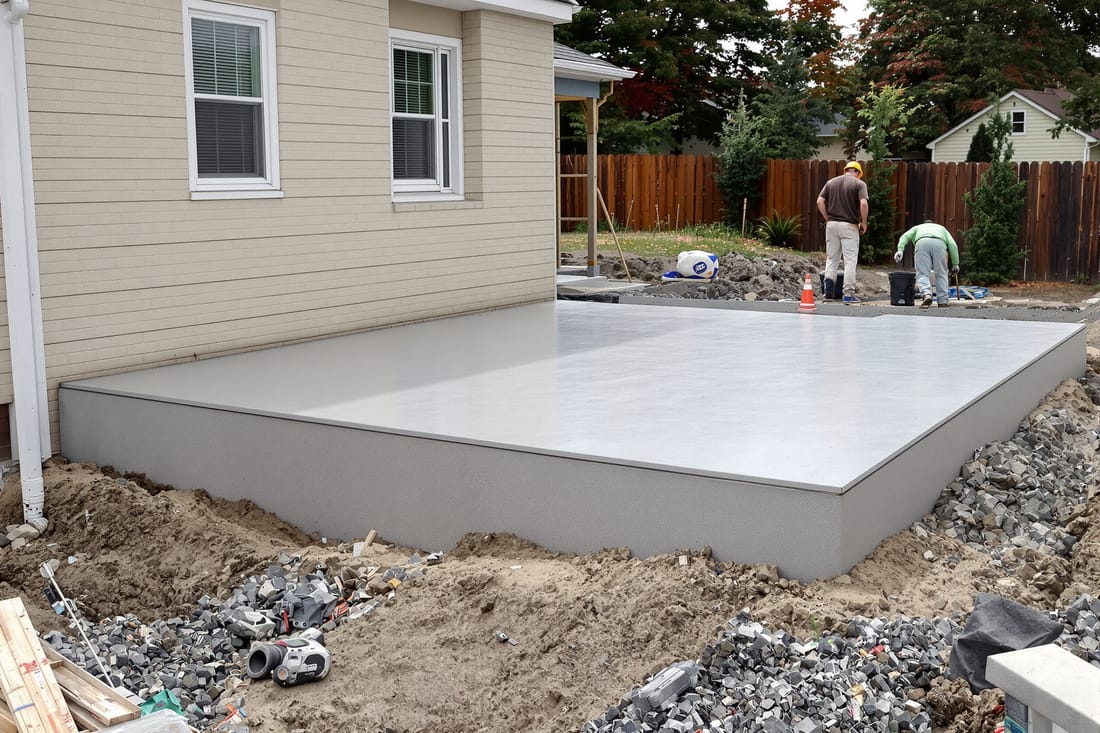
Concrete slab installation for Round Rock homes and businesses
When you hire Superior Concrete Round Rock for a concrete slab, you get a crew that lives and works right here in Williamson County. Our team pours slabs for patios, room additions, driveways, shops, and small commercial projects throughout Round Rock, Pflugerville, Hutto, and nearby areas. We design each slab around your specific use, the soil on your lot, and the way water moves across your property.
Before we ever schedule a pour, we visit your site in person. We look at slope, existing structures, access for concrete trucks, and any potential drainage issues. If your property has the typical Central Texas clay that swells when wet, we adjust slab thickness, reinforcement, and base prep to keep it from cracking or shifting prematurely. We will walk you through what type of slab makes sense for your project and explain the pros and cons in plain language so you can make informed decisions.
How we plan and prepare your concrete slab project
A durable slab starts in the planning stage. First, we confirm how the slab will be used: parking vehicles, supporting a shed or room addition, or creating a finished surface like a patio. This determines the thickness, concrete strength (PSI rating), and amount of steel reinforcement we will use. For example, a typical residential patio in Round Rock might use a 4 inch slab with 3000 to 3500 PSI concrete, while a garage or RV pad may call for 5 to 6 inches and 4000 PSI concrete.
Next, we evaluate your soil and drainage. Many Round Rock neighborhoods sit on expansive clay over shallow rock. In these spots, we usually recommend a well compacted gravel base and sometimes a thicker edge beam to help the slab resist movement. If water tends to collect on your property after storms, we plan slopes and drains so water runs away from your house and off the slab instead of beneath it. This early planning prevents many of the cracking and settling issues that homeowners in our area often see with poorly installed slabs.
We then create a written scope that includes slab dimensions, thickness, reinforcement type, concrete mix, and any finishes or coatings you want. You will see exactly what you are paying for in clear, specific terms instead of vague line items.
Site preparation, forming, and base work
Once you approve the plan, Superior Concrete Round Rock starts by marking out the slab and checking elevations with a laser level. We remove grass, roots, and soft soil until we reach firm ground, typically 4 to 8 inches below the planned finished height depending on the slab design. Any organic material that is left under a slab can rot and create voids, so we are thorough at this stage.
We install wood or metal forms around the perimeter to define the slab shape and final height. These forms are carefully staked and braced so they do not move when the concrete goes in. At this point we also set any required pipe sleeves, conduit, or anchor locations if you plan to add utilities or bolt down a structure.
For most Round Rock projects we spread and compact a layer of crushed limestone or road base under the slab. This creates a stable, level surface that drains better than native clay. We use mechanical plate compactors or rollers, not just hand tampers, because proper compaction is essential to prevent future settlement. In areas that hold water, we may install a moisture barrier and adjust the subgrade to guide runoff to the yard or to a drain.
Reinforcement, concrete mix, and the pour itself
Before concrete trucks arrive, our crew installs reinforcement based on your design. This might be #3 or #4 rebar in a grid pattern, thickened grade beams around the edges, or welded wire mesh for lighter duty slabs. We set reinforcement on chairs or dobies so the steel sits in the middle of the slab, not on the ground, which is key for strength. In some cases, such as for large or irregular slabs, we may add control joints with preformed materials before pouring.
We order concrete from reputable local batch plants and specify the exact mix you need. That includes PSI strength, aggregate size, and any admixtures such as plasticizers for workability or air entrainment for slabs exposed to frequent wet and dry cycles. For hot Round Rock summers, we often schedule morning pours, add set control admixtures, and increase manpower so we can place, screed, and finish the concrete before it starts to set too quickly.
During the pour, we guide the chute or use wheelbarrows or pump trucks if access is tight. We spread the concrete evenly, then mechanically screed it to the proper height. After screeding, we use bull floats to smooth the surface and bring up fine paste, which sets the stage for a quality finish. Throughout the process we check slab thickness and slope to make sure it matches the plan and drains correctly.
Finishing, curing, and protecting your new slab
Finishing style depends on how you plan to use the slab. For driveways, shop floors, and most patios, Superior Concrete Round Rock usually recommends a broom finish that provides traction when wet. For covered patios or interior spaces that will receive flooring, we may use a steel trowel finish for a smoother surface. If you plan to stain or seal the slab, we finish it in a way that supports those future treatments.
We cut control joints at specific spacings to help manage cracking. In Round Rock, where temperature swings and soil movement are common, these joints are vital. For a typical 4 inch residential slab, joints are spaced roughly 8 to 10 feet apart in both directions, adjusted to fit the shape of your project. These cuts guide where the concrete will naturally crack so that it happens in a straight, less visible line.
Curing is where many slab projects go wrong. We do not simply pour and walk away. We apply curing compound or use wet curing methods to help the concrete retain moisture while it gains strength. We will give you clear instructions on when you can walk on the slab, when light items are okay, and when it is safe to park vehicles or place heavy structures. Proper curing in the first 7 days significantly improves long term durability.
What affects the cost of a concrete slab in Round Rock
Homeowners often ask what drives the price of a concrete slab. The main factors are slab size, thickness, reinforcement, site conditions, and access. A simple backyard patio on a flat, open lot is usually more affordable per square foot than a thickened driveway slab on a sloped site that requires extra excavation and forming. More inches of concrete and more steel both add cost but also increase strength and lifespan.
Soil conditions around Round Rock can add complexity. If we find very soft or expansive soil, we may recommend deeper excavation, more base material, or thicker edge beams, all of which affect the budget. Limited access that requires wheelbarrows or a pump truck instead of direct truck discharge can also add to labor and equipment costs.
At Superior Concrete Round Rock, we provide itemized estimates rather than a single lump sum so you can see how each decision impacts price. We will also discuss options if you are working within a certain budget, such as adjusting slab size, choosing an appropriate but not overbuilt thickness, or planning decorative finishes as a future upgrade instead of including them on day one.
Questions to ask before you hire a slab contractor
Before you commit to any concrete slab contractor in Round Rock, there are a few key questions you should ask. First, confirm that they have experience with the specific type of slab you need, whether that is a driveway, shop floor, pool equipment pad, or foundation for an outbuilding. Ask to see photos of recent projects in the area and, if possible, drive by a finished job to see how it looks after some time in real conditions.
You should also ask how they handle soil evaluation, base preparation, reinforcement, and curing. A qualified contractor will explain their process clearly, including typical slab thicknesses and reinforcement choices for our local soils. Be cautious of anyone who shrugs off reinforcement or base preparation as optional, since those are often where shortcuts are taken that you cannot see on the surface.
Superior Concrete Round Rock encourages homeowners to compare estimates line by line. Look for details about concrete strength, thickness, rebar spacing, control joint layout, and finish type. We are happy to explain our proposal, adjust it if your needs change, and coordinate with other trades such as framers or electricians if your slab will support a structure. Our goal is a slab that performs as good as it looks, built to hold up in Round Rock conditions for many years.