Home › Sitework and Structural Concrete
Reliable, professional structural concrete in Round Rock, TX from Superior Concrete Round Rock. Contact us today for a free on-site estimate.
Superior Concrete Round Rock provides professional structural concrete throughout Round Rock, TX, Texas and the surrounding area. Our licensed, insured crew delivers safe, clean, on-time work with a free estimate before anything begins. Call (737) 520-3156 or request your free quote.
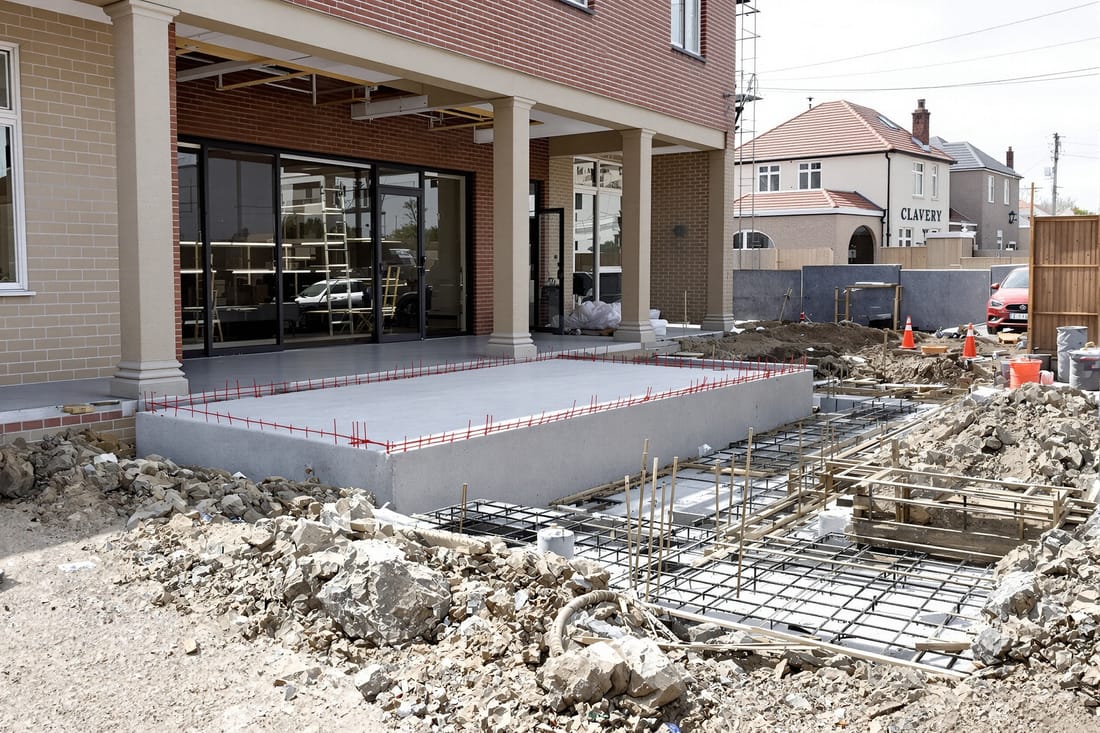
Sitework and Structural Concrete Expertise in Round Rock
Superior Concrete Round Rock provides complete sitework and structural concrete services for residential and commercial projects throughout Round Rock and the surrounding Williamson County area. Our team handles everything from clearing and grading to forming, reinforcing, and pouring the structural concrete that supports your building for decades.
Here, “structural concrete” means any concrete element that carries load: foundations, grade beams, piers, structural slabs, equipment pads, retaining walls, and stairs. Sitework is the preparation that makes that structural concrete perform as designed, including soil correction, drainage management, and subgrade compaction.
Because Round Rock soil often transitions quickly from shallow rock to expansive clay, the right combination of sitework and structural design is critical. We do not treat this as a one-size-fits-all service. Every project starts with a review of your plans, the geotechnical report if available, and the actual soil conditions we see in the field.
How We Approach Sitework for Strong, Long-Lasting Concrete
Proper sitework is the foundation of your structural concrete. Our crews begin with layout, using control points and benchmarks so finished elevations match your plans and local drainage requirements. We clear vegetation and organic material, then strip any soft or unsuitable soils that could lead to settlement.
In many Round Rock lots, we encounter a mix of caliche, limestone, and clay. Where the soil is expansive or poorly draining, we may recommend reworking the subgrade, adding select fill, or stabilizing with lime or cement, depending on engineer direction. This step is essential to keep structural concrete from cracking or shifting as soils swell and shrink.
We shape the site with precise grading so water moves away from foundations, drive lanes, and slab edges. Drainage is especially important in areas east of I-35, where heavy rains can pond quickly. We install swales, French drains, or area drains where needed so your structural elements are not sitting in water. Compaction testing can be coordinated with a third-party lab to verify that subgrade and base meet specified density, which directly affects long-term performance.
Structural Concrete Elements We Build
Superior Concrete Round Rock places and finishes a wide range of structural concrete components for new builds, additions, and repairs. Common elements include conventional slab-on-grade foundations, post-tension slabs, thickened edge slabs, and structural slabs on void forms where expansive soils or elevated conditions require it.
For commercial and multifamily projects, we install grade beams, continuous and isolated footings, drilled piers, machine and equipment pads, dumpster and loading pads, and stair and landing systems. We also build structural retaining walls that manage changes in elevation while resisting soil and surcharge loads.
Each structural concrete element is built per engineered plans, including bar sizes, spacing, concrete strengths, and embed locations. We coordinate with your framer, steel fabricator, plumbing contractor, and electrician so penetrations, sleeves, and anchor bolts are placed accurately. This coordination up front saves you from core drilling or rework later, which often costs far more than doing it right the first time.
Step-by-Step: From Forms to Finished Structural Concrete
Once sitework and subgrade are ready, we set forms using wood or metal formwork, braced to hold exact dimensions and elevations. Batter boards, string lines, and laser levels keep foundation lines straight and slab surfaces flat. We double check measurements against your plans so wall locations, door openings, and offsets are correct.
Reinforcing steel is then installed according to structural drawings. Our ironworkers tie rebar chairs and supports so steel stays at the proper height during the pour, preventing it from sinking to the bottom where it would provide little structural benefit. For post-tension slabs, certified installers place and stress cables in the sequence required by the engineer and the cable supplier.
Before any concrete truck arrives, we schedule pre-pour inspections with the appropriate city or county inspector when required. During the pour, we maintain consistent slump and placement methods to avoid segregation. Vibrators are used where needed to consolidate concrete around reinforcing, especially in grade beams, piers, and walls. Once placed, we screed, bull float, and finish the surface, then apply curing methods like water curing, curing compound, or coverings, depending on the weather and the structural requirements.
Materials, Design Options, and Local Conditions
Structural concrete in Round Rock is usually specified at 3,000 to 4,000 psi compressive strength, sometimes higher for heavily loaded floors or specialized equipment pads. Superior Concrete Round Rock works closely with local ready-mix suppliers so mix designs account for temperature, placement method, and structural demands. In hot Central Texas summers, we may specify retarding admixtures or request cooler mix temperatures to give adequate working time and reduce thermal cracking.
We help you and your design team weigh options such as traditional rebar versus post-tension systems, thickened slab edges versus grade beams and piers, and slab-on-grade versus structural slabs. Each option has implications for cost, speed, and performance on Round Rock’s variable soils. For example, post-tension slabs can manage expansive clays effectively on many residential sites, while drilled piers and grade beams are often the better choice for larger commercial footprints or sloping sites.
We also discuss practical details, such as floor flatness requirements for warehouses, forklift traffic, or racking systems, as well as surface treatments for durability. If you need a structural slab that also serves as a finished floor, we can plan for trowel finishes, densifiers, or surface hardeners to meet your use and maintenance expectations.
Costs, Scheduling, and Common Problems to Avoid
The cost of sitework and structural concrete in Round Rock depends on several key factors: soil conditions, access for equipment and trucks, the amount of excavation and haul-off required, concrete volume, reinforcement type, and complexity of forming. Rock excavation, deep piers, or extensive grade beams will increase cost, while good access and straightforward layouts help maintain budget.
To keep your project on schedule, we sequence work so utilities, inspections, and concrete placement align. Delays often occur when underground plumbing or electrical rough-ins lag behind sitework, so we coordinate with your other contractors before we mobilize. Weather is another driver. During wet periods, poorly prepared sites can turn into mud pits, making compaction and inspections impossible. Proper initial grading, temporary rock entrances, and drainage planning reduce weather-related downtime and protect your budget.
Common problems we help clients avoid include inadequate compaction under slab areas, missing or misplaced anchor bolts or sleeves, improper rebar cover, and uncontrolled cracking caused by poor joint layout or rushed curing. Our crews follow detailed checklists and communicate with you and your design professionals to catch these issues early, before they become structural or cosmetic problems that are costly to correct.
What Round Rock Property Owners Should Look For
When you hire a contractor for sitework and structural concrete in Round Rock, you should expect more than basic flatwork experience. Look for a company like Superior Concrete Round Rock that understands local building codes, inspection requirements, and the realities of building on Central Texas soils. Ask how they handle compaction testing, pre-pour inspections, concrete mix selection, and reinforcement verification.
Request references for similar structural projects, not just driveways or patios. A contractor experienced with structural concrete will be comfortable reviewing engineered plans with you, explaining load paths, foundation types, and the purpose of each structural element. They will also be transparent about how weather and site conditions affect the schedule and will provide a clear plan to protect fresh concrete from early traffic and temperature extremes.
If you are planning a new build, addition, or major structural repair in the Round Rock area, contact Superior Concrete Round Rock early in the design phase. Our input on sitework and structural concrete can help your engineer tailor the design to your specific site, which often saves money and avoids surprises once the dirt is open and work is underway.